




Providing Top Quality Care to Patients Across Nassau County, Long Island, Queens, and Surrounding New York, NY Areas

Important! PRINE Health has a new and improved patient portal, powered by Leap. Sign up here

Chronic Kidney Disease

3 Warning Signs That You May Be Experiencing Kidney Failure

Your kidneys are vital to your health. It is crucial that you watch for early warning signs of issues or problems you may be experiencing that could lead to kidney failure.


What Do The Kidneys Do In The Body?

The primary function of your kidneys is to filter out the toxins built up in your body. If your kidneys begin to cease to function properly, it can lead to a plethora of health problems. It can ultimately lead to the need for dialysis.

Kidney function is measured by how well the kidneys remove toxins from the blood by using a measurement called the Glomerular Filtration Rate, or GFR. There are five stages of kidney functioning. Stage 1 denotes normal or high-functioning kidneys, whereas stage 5 is end-stage renal (kidney) failure. Each subsequent stage from 2 through 4 indicates a percentage of the decline in GFR.

It is important to know that the initial decline of kidney functions, or renal disease, is often silent. The best way to prevent kidney injury is to moderate changes in your overall health and always consult with a doctor if anything seems out of the norm.

Here are three signs that could indicate that you are beginning to experience a decline in kidney function.

The First Signs of Kidney Failure

1. Dizziness and Fatigue

One of the first possible signs of weakening kidneys is the experience of overall weakness in yourself and your overall health. This can include feelings of dizziness or fatigue due to a build-up of toxins in the blood. Oddly enough, another fatiguing disorder, anemia, can be linked to kidney problems. If you find that you are unusually tired, don’t panic. This can also be caused by stress, overwork, or other typical day-to-day issues. But if you are getting enough rest and still feel more fatigued than normal, especially if you are finding yourself dizzy, see your physician immediately. Tell her or him what you are experiencing and ask that he refer you to a Kidney Specialist (Nephrologist) to be on the safe side. It’s best if your General Practitioner (GP) works with a Kidney Specialist on a regular basis, so you get the best overall care.


2. Swelling (Edema)

Though there are several causes of swelling, if you are swelling in your legs, ankles, wrist, or even around your eyes, this could be a sign that your kidneys are not functioning properly. This is often caused by electrolyte or other nutritional abnormalities that affect the proper filtration capacity of the kidneys. Lower extremity swelling can be a sign of heart disease, kidney disease, or other forms of poor circulation.


3. Changes in urination

A third possible sign of beginning kidney injury is a change in urination. Things like changes in the amount of urine, foaming, pale or dark urine, or red coloring could be a warning sign that you may be experiencing a problem. Whether or not the problem is simply dehydration or the beginning of severe kidney dysfunction, your doctor or specialist in the field can determine the issues.
With the exception of some acute (or immediate) problems, including seeing blood in the urine or an inability to urinate, or such isolated conditions in pregnancy like pre-eclampsia, kidney failure often moves through the five stages slowly. Noticing changes, including these three signs, can alert you and your doctor of potential problems early where intervention can often slow or halt progression. Always remember to drink plenty of water to aid in the filtration process and contact your doctor if you begin to experience any of these signs.

If you are experiencing more than one of these symptoms, make an appointment with your GP and talk about your next best steps. You mustn’t wait to get this checked out. The earlier renal failure is detected the better the chances of staving off major problems. No one wants to get to the point where dialysis is needed. Not all GPs work hand in hand with doctors who understand the issues of kidney problems the way a doctor who specializes in the health of one’s kidneys does. Be sure that your doctors work together and communicate with you about your options and the best choices you can make. If you are experiencing renal failure, there will be changes to your diet and your lifestyle that must be made. You will need to talk to both your GP and your Nephrologist to create a best-practice plan for your health.

At PRINE Health, we have both general practitioners and Nephrologists on staff who will work together to create the best plan for you. Please contact us if you would like more information.

Do I Need A Primary Care Doctor To Work With My Kidney Specialist?

If you are experiencing issues related to kidney disease, you should be working with a specialist who knows your problems and deals directly with your particular needs. While that doctor is key to your health regarding your kidneys, that doesn’t mean that he or she should be your only medical practitioner. Nor should your primary doctor be the person who is solely in charge of your renal disease issues.

Too often, kidneys are overlooked in general practice. Issues can be mistaken or ignored. Too often, patients and their primary care providers can be unaware of renal problems. By failing to understand or recognize underlying kidney issues, a patient can be in stage 3 chronic kidney disease, which can quickly dwindle to stage 4 before it is caught and dealt with. In general practice, kidneys are often ignored not because of negligence but because of a lack of understanding and communication with a kidney health specialist.


How a Primary Care Doctor Creates a Path with Nephrologists?

Communication must be set up between the primary care doctor and the nephrologist. A nephrologist doctor specializes in the diseases and conditions that affect the kidneys. Their job is to understand and treat chronic kidney disease, kidney infections, and, ultimately, kidney failure. The hope is to catch such ailments long before reaching the situation of kidney failure and the need for dialysis. When the primary care doctor works hand in hand with the nephrologist, the patient may be able to see a far better outcome regarding his or her kidney and overall health.

There is a shortage of nephrologists in the field, and thus having a primary care doctor who is savvy and better educated about the signs of renal issues, can help catch issues before they escalate. This is not an uncommon concept. Primary care doctors have become adept at diagnosing other diseases such as cancer, diabetes, and heart disease. Collaborative care is the best hope for patients who need both the input of a specialist and the care of a primary physician who often knows the person’s medical history more intimately. Working together is the key to health success.


What is the best way to merge the care of a general practitioner and a kidney specialist when facing renal health issues?

The goal of any doctor is to create the best possible quality of life for his or her patients. Whether a specialist or a primary care doctor, information is the most critical factor. It is often difficult for doctors who are not working in the same practice to communicate effectively. However, we need to have these severe and intricate problem-solving conversations. The sooner a nephrologist is involved in the care of the patient-facing kidney disease, the better the chance for less stressful long-term outcomes. It will often fall upon the primary care doctor to help the patient make difficult lifestyle changes, including changes in eating habits and diet, stress management, exercise regimens, and even sleep habits. These doctors are often tasked to offer a form of psychological counseling about these difficult changes. The cross-over benefits for patients’ other diagnoses are well known.

In return, the family physician understands the importance of the guidance and planning the consulting nephrologist brings to the table as the expert on this pathology. They need to agree on the things that are of utmost importance for patients in both their care and help the patients they are working with, collaborating to succeed in making those necessary life changes. Together, they can motivate the patient to reach the best possible health outcome.

When a medical practice includes both primary physicians and nephrologists in the same environment, collaboration is far easier to achieve. Time may be of the essence with many patients. Having doctors who work well together and communicate easily is the best-case scenario when dealing with patients facing arduous treatments for kidney disease (CKD). This kind of communication between PCPs and specialists has proven track records of improved clinical outcomes when dealing with chronic illnesses. Too often, this collaboration doesn’t happen, so when it is part of the practice, the patient benefits exponentially.

PRINE Health has physical offices in the Manhasset and Hicksville, New York area that include both primary care doctors and nephrologists. They also offer telemedicine. If you’re seeking a nephrologist and primary care collaborative team, the professionals at PRINE Health would love to speak with you and assist you in your health success.

What Does A Nephrologist Do? And Why You May Need One.

A nephrologist is a physician who specializes in the field of nephrology.


Nephrology

Nephrology is a specialty of internal medicine that focuses on the management and treatment of kidney disease or kidney disorders.

The kidneys have several vital functions, including:

  • removing waste and excess fluid from the blood
  • maintaining your body’s electrolyte balance
  • releasing hormones with functions such as managing blood pressure


Nephrologist

Primary care physicians often work to help prevent the early stages of kidney disease. As the situation progresses, a primary care physician may refer you to a kidney specialist, or the nephrologist.

A Nephrologist has completed a 3-year residency in Internal Medicine and a specialty fellowship in nephrology that is typically at least 2 years. Some nephrologists have sub-specializations in areas of nephrology such as hypertension (high blood pressure), transplant, glomerular disorders (protein or blood in urine), or critical care medicine.


What Conditions Does A Nephrologist Treat?

  • protein or blood in the urine
  • chronic kidney disease
  • kidney stones
  • kidney infections
  • kidney swelling due to glomerulonephritis or interstitial nephritis
  • kidney cancer
  • polycystic kidney disease
  • renal artery stenosis
  • nephrotic syndrome
  • end-stage kidney disease
  • kidney failure, both acute and chronic

A nephrologist may also be involved in the management of the following common conditions:

  • high blood pressure
  • diabetes
  • heart disease
  • peripheral vascular disease


Types Of Tests A Nephrologist My Order

Blood tests

  • Serum creatinine. Creatinine is a waste product and is present at higher levels in the blood of people with kidney dysfunction. This is the single best routine blood test to screen for kidney problems.
  • Blood urea nitrogen (BUN). This is also a waste product related to a protein that is found in the blood and a sign of kidney dysfunction.
  • Glomerular filtration rate (GFR) – This test measures how well your kidneys are filtering your blood. GFR begins to decrease below normal levels in kidney disease.
  • Estimated Glomerular filtration rate (eGFR) – This is a test that uses other laboratory data to approximate the glomerular filtration rate. The eGFR relates to the severity of kidney dysfunction which is broken into Stages from Stage 1 to Stage 5.
Stage 1 Stage 2 Stage 3 Stage 4 Stage 5
eGFR in the normal range (greater than 90) with other signs of kidney damage, like protein in the urine or physical damage to the kidneys eGFR in the normal range (60-89) with other signs of kidney damage, like protein in the urine or physical damage to the kidneys eGFR 30-59, moderate kidney damage eGFR 15-29, severe kidney damage eGFR less than 15, the kidneys are close to failure or have already failed

Urine tests

  • Urinalysis. A simple urine test can help to reveal the presence of abnormal amounts of blood, glucose, or protein, or whether there may be an infection.
  • Albumin/creatinine ratio (ACR). This measures the amount of the protein, albumin in your urine. Albumin in the urine may be a sign of kidney dysfunction.
  • 24-hour urine collection for Creatinine Clearance. This method uses a special container to collect all of the urine that you produce during a 24-hour period to calculate the amount of creatinine that is cleared. This may provide a more accurate assessment of kidney function compared with the eGFR.


Procedures

In addition to reviewing and interpreting laboratory tests, a nephrologist may also perform or work with other specialists on the following procedures:

  • imaging tests of the kidneys, such as ultrasound (Renal Sonogram)
  • dialysis, including placement of the dialysis catheter or creation of a Fistula or Graft for dialysis use
  • kidney biopsies
  • kidney transplants


What Is The Difference Between Nephrologists And Urologists?

The fields of nephrology and urology share some overlap because they can both involve the kidneys. Nephrologists are the medical specialists of the kidney whereas Urologists are surgical specialists of the kidneys.  A Urologist also focuses on diseases and conditions that can affect the male and female urinary tracts such as the ureters, bladder, and urethra. A urologist also works with the male reproductive organs, such as the penis, testes, and prostate.


When To See A Nephrologist

Kidney disease is very common. About 1 in 7 Americans have kidney disease and it is estimated that 33% of the population is at risk. The risk factors for chronic kidney disease are:

  • diabetes
  • High blood pressure (hypertension)
  • heart disease
  • obesity
  • a family history of kidney problems

Early stages of kidney disorders may not have any symptoms or may have nonspecific symptoms such as fatigue, sleep problems, and changes in urination. Regular testing can monitor your kidney function, particularly if you’re at risk for kidney disease. An abnormality in one of the tests above would often lead to a referral to a nephrologist. You may also seek the attention of a nephrologist if you have:

  • protein in your urine
  • recurring kidney stones
  • high blood pressure that’s more challenging to control
  • swelling in your legs
  • a rare or inherited cause of kidney disease


Conclusion

A nephrologist is a type of doctor who specializes in diseases and conditions that affect the kidneys. Nephrologists work to treat conditions such as chronic kidney disease and help delay the progression of kidney disease to end-stage kidney disease (requiring dialysis or transplant).

PRINE Health is a medical group with several nephrologists along with primary care and other complementary providers. If you need a Nephrologist, we are here to help. Contact us today!

The Importance Of Kidney Care For Diabetics

If you have diabetes, taking care of your kidneys should be a top priority. Your kidney’s main function is to filter out and remove any waste and extra water from your blood. Diabetes is the most common cause of both kidney disease and kidney failure, due to the fact diabetes can lead to your kidneys no longer functioning. Speak with a professional at a medical group in Nassau County if you are concerned with how your diabetes could affect your kidneys. At PRINE Health we can provide you with the proper care and information to help you take care of as well as protect your kidneys.


How Diabetes Damages Your Kidneys:

Diabetes is characterized by high blood sugar, which means the kidneys have to work even harder to filter out the waste in your blood.  Your kidneys are overworked and damaged protein starts to leak into your urine. Soon after your blood pressure rises, waste builds up in the blood, and kidney function will continue to decrease until you reach kidney failure.  If there is no treatment before the kidneys reach kidney failure, a kidney transplant or regular dialysis will be needed to filter out your blood.


Symptoms of Kidney Disease:

Various signs point to kidney disease.  Here are some things to look for if you think you could have kidney damage:

  • High blood pressure
  • Blood test shows a poor estimated glomerular filtration rate (eGFR)
  • Urine tests show high protein levels
  • Urinating more often than normal
  • Swollen ankles
  • Weight gain
  • Decrease in appetite
  • Feeling weak


Ways to Treat Kidney Disease:

If you have diabetes and kidney damage, there are a few ways a medical group in Nassau County may suggest to help you treat your kidney damage or slow down its progression.  Here are some of those ways:

  • Lifestyle changes – Regular exercise and healthy eating habits can help manage your cholesterol, blood glucose, and blood pressure and help your kidneys not have to work too hard.  Lifestyle changes including eating less protein, salt, or fat, limiting alcohol consumption, and quitting smoking are also recommended.
  • Medication – Limiting the consumption of painkillers can help slow down kidney damage.  If you have diabetes your doctor might prescribe ACE Inhibitors or angiotensin receptor blockers to also help slow kidney damage and manage blood pressure.
  • Regular monitoring – Check your blood glucose often to keep your diabetes in check and also check your blood pressure often to make sure it isn’t too high.


How a medical group in Nassau County Can Help You:

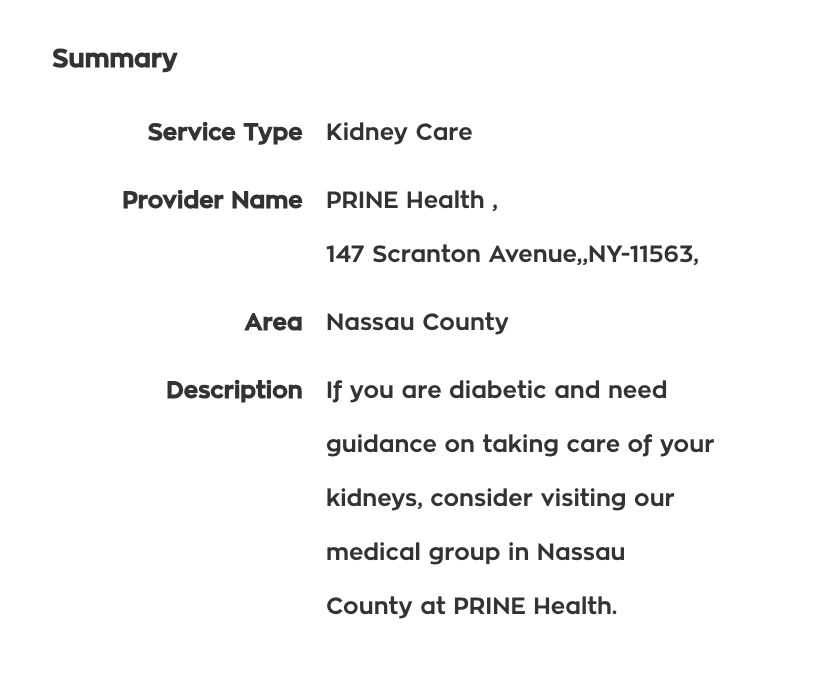
If you are diabetic and need guidance on taking care of your kidneys, consider visiting a medical group in Nassau County.  At PRINE Health, there are plenty of experienced doctors who can answer questions, keep you informed, and help you take care of your kidneys to ensure that you are in the best health possible. Contact us for more information on how we can help you.

PRINE Health Nephrology Group Expands Further Beyond The Kidney

Garden City, NY: Today, PRINE Health Nephrology expands its practice, with plans to launch two new divisions, PRINE Vascular and PRINE Podiatry. In September, PRINE is set to open a full-service Vascular Lab at Parker Jewish Institute in New Hyde Park, NY.  PRINE Health cares for a large kidney patient population, but the vascular initiative will not be limited to dialysis access. Due to the high incidence of peripheral vascular disease in this population, there will be an emphasis on PVD, wound care, and cutting-edge, interventional procedures. The new Chief of PRINE Vascular is Dr. Daniel Simon, a highly skilled Interventional Radiologist who was a past Co-Chief of Interventional Radiology at Northwell’s North Shore University Hospital in Manhasset. PRINE has also signed Dr. Robyn Joseph, a prominent local podiatrist, to become the Chief of PRINE Podiatry for this complementary division which is planned to go live in October.

PRINE Health is led by the former CEO of Beacon Health Partners, Dr. Simon Prince, a nephrologist with experience in population health and provider networks.  Dr. Prince said, “We are just getting going. Everyone at PRINE is excited about our new vascular and podiatry initiatives, as well as our potential to innovate and elevate the care we deliver to this often overlooked vulnerable patient population.”


ABOUT PRINE HEALTH


PRINE Health, with its tagline, Primary Nephrology is a unique, multispecialty medical group focused on chronic kidney disease. PRINE launched last year with the merger of 6 independent nephrology groups to become the largest independent nephrology group in New York. In addition to the nephrologists, interventional radiologists, and podiatrists, PRINE has brought in seasoned primary care physicians and is involved in multiple ongoing conversations with other complementary specialties. There are currently 9 office locations and 18 dialysis center affiliations in Long Island and Queens.

PRINE also has a management company (MSO) that is owned and governed by physicians. The MSO provides traditional practice management and population health services to the medical group. Over the last several months, PRINE has developed care management capabilities and several strategic relationships. PRINE has partnered with managed care payors and was recently selected by CMS to participate in a new value-based kidney care program, Kidney Care First in 2021.  Additionally, PRINE has partnered with the data scientists at pulse data to use predictive analytics and artificial intelligence on their growing patient population as efforts are being made to get ready to take risks in this complex, costly CKD/ESRD population.

To find out more about PRINE, visit www.prinehealth.com.

Which Vitamins Are Best For People Dealing With Kidney Disease?

Vitamins are important for everyone. The human body functions best when in balance. The best way to achieve optimum health is through a balanced diet, but with our busy lives and often unhealthy eating habits, diet alone may not work for many people. This is especially true for people with chronic kidney disease (CKD), which is why good vitamins are important.

Our bodies need vitamins and minerals to help them with our most basic and critical bodily functions. It would be great if we could simply get everything we need from the foods we eat, but when that is not possible, vitamins will work to help your body repair tissue and get as much energy as possible from the foods you eat, so you maintain a healthier life. Vitamins and minerals are essential for the overall health of your body.

People suffering from kidney disease, especially those on dialysis, may not be getting enough of the daily vitamins needed to increase their health and assist with keeping CKD under as much control as possible. This can lead to issues such as skin lesions, fatigue, muscle weakness, and nerve pain.

When dealing with CKD, there may be a variety of reasons why a patient may not be able to get all the recommended vitamins needed. Some water-soluble vitamins will have more stringent requirements to work well with issues CKD may cause. Some kidney medicines may not play well with specific vitamins. If you have CKD, your waste products will likely build up and affect how vitamins react to your body. Your physician will likely make changes in your diet so you may not get some of the vitamins from certain foods no longer part of your day-to-day foods and eating habits will change based on how well you feel day-to-day. Some days your appetite may not be robust.


Vitamins that are typically recommended for CKD patients:

B1, B2, B6, B12, folic acid, niacin, pantothenic acid, and biotin, as well as some vitamin C, are essential vitamins for people with CKD. Vitamin C may be suggested in low doses as large doses can cause a buildup of oxalate. Oxalate can cause build-up in bones and soft tissue and can be painful over time.

You will often see B complex vitamins grouped together, but each of the B vitamins plays a different role. Pantothenic acid and niacin are part of the B complex group and are taken so that the food you eat can more easily be turned into the energy your body will need. B1, B2, B6, B12, and folic acid work in conjunction with iron, preventing you from becoming anemic. Your doctor will decide if you need to take iron and, if so, what dosage.

Vitamin C can help bruises heal faster, and your doctor will probably recommend adding this to your vitamin regimen. Vitamin D is also significant, especially in maintaining healthy bones. If you’re dealing with CKD, your doctor will recommend what type of vitamin D and dosage is needed.

You will likely need to avoid some vitamins if you have kidney disease. A, E, and K can cause nausea and dizziness at the very least if too much of these build up in your system over time.


What about herbal remedies and supplements?

It is best to avoid herbal remedies and supplements sold over the counter if you suffer from chronic kidney disease and are on dialysis. These remedies may cause issues when interacting you’re your doctor-prescribed medicines and may cause serious side effects. Always ask your doctor before taking any vitamin or supplement.


What is the best way to get the vitamins I need if I am dealing with CKD?

No one wants to take several pills every day. Filling pillboxes and remembering to take every vitamin needed to stay as healthy as possible can be cumbersome. Dealing with CKD is a challenge. If it is at all possible, you will be better off taking one vitamin formula that includes everything your body needs.

PRINE Health has created a formula called PRINE VITE, which includes vitamins B1, B2, B6, B 12, folic acid, niacin, pantothenic acid, and biotin, as well as a small dose of vitamin C. PRINE VITE also includes Vitamin D 1000 IU and a higher dosage of B1 which has been shown to decrease and potentially reserve early diabetic kidney disease. This formula also contains two herbs, Dandelion Extract, known for its anti-inflammatory, diuretic, and cholesterol-lowering effects, and Uva Ursi, which has a history of aiding the urinary tract and UTIs. This formula is also gluten-free and non-GMO.

For more information on PRIVE VITE, or if you seek the advice of a Nephrologist, visit us at https://prinehealth.com/

PRINE Health Selected By CMS For Kidney Care First Initiative


Kidney Care First Initiative – CMS

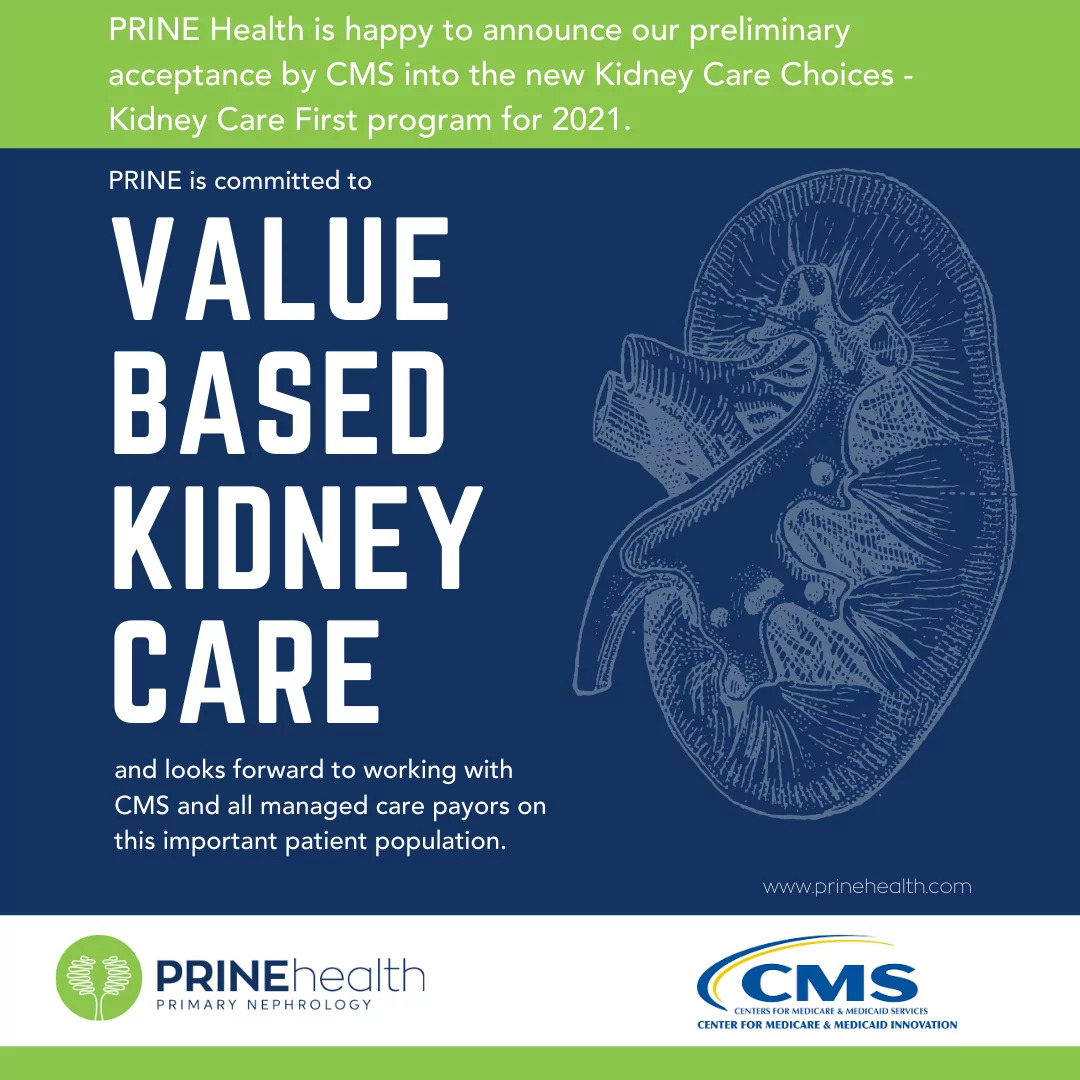
PRINE Health is happy to announce our preliminary acceptance by CMS to participate in the upcoming Kidney Care First program, a new offering from CMS – CMMI under the Kidney Care Choices initiative. This is a program that stems from the Executive Order, Advancing American Kidney Health, and championed by HHS. We will make a final decision in Fall 2020 as to whether we will participate in the first performance year which is set to kick off, on April 1, 2021. The start was initially set for January 1, 2021, but was delayed due to COVID-19.

PRINE is excited to partner with CMS and other managed care payors on value-based kidney care initiatives. We feel this important, high-cost, complex patient population has been overlooked for too long. There is a great deal we can do together to raise the level of care and improve alignment between payors, patients, providers, and other caregivers.

In the meantime, PRINE is investing in technology and care management resources to further prepare for value-based contracting with various strategic partners.

PRINE Health IPA Partners With Empire Blue Cross Blue Shield

Empire Blue Cross Blue Shield has entered into an agreement with the PRINE Health Medical Group and PRINE Health IPA. The contracts are based on our commitment to Value-Based Kidney Care with our shared mission to:

  • Increase Home Dialysis
  • Facilitate more Kidney Transplantations
  • Improve Quality ESRD Starts outside the hospital setting with AV Fistuals
  • Lower overall cost
  • Improving the quality of care and Quality of Life for the advanced chronic kidney disease patient.

We look forward to developing this relationship further as we continue to build our infrastructure and capabilities toward providing an even better level of care for this important patient population.

For Nephrologists and complimentary physicians who take part in the care of Chronic Kidney Disease patients, please contact us to learn more about joining the IPA.

The Advances Of Telemedicine For CKD Patients

Telemedicine Milestones for CKD Patients

Over the last 12-24 months, we’ve seen legislatures and stakeholders in the Renal/Medical community place an increased emphasis on both telemedicine and home dialysis. As a result of the global pandemic, change and progress have been thrust upon patients and providers alike.

While the term ‘telemedicine’ sounds like an intimidating buzzword, all it means is an increased sense of safety and flexibility for patients, allowing them to be seen from the comfort of their own homes on a schedule that suits them best. No longer do patients have to worry about transportation to and from the doctor’s office, nor do they have to worry about additional safety measures from the virus. This is imperative for kidney failure patients who see a physician more often than other seniors. But we didn’t get here overnight. Below we will touch on milestones that laid the foundation for the rise of telemedicine for kidney disease patients.


Recent Events

One of the few objective successes of the President Trump era came in 2019 when he signed the Advancing American Kidney Health executive order, paving the way for an overhaul in the treatment process for end-stage renal disease patients. Not only did the President’s order shift resources towards Americans who have CKD and ESRD and how they’ll receive coverage from Medicare or Medicaid, but it also paved the way to make access easier for patients to receive organ transplants, telemedicine visits, and home dialysis.

In the United States, most patients receive dialysis for end-stage renal disease at a treatment facility, however, across the globe most patients receive their dialysis at home. However, there was a tangible shift in the last 12 months as a result of the pandemic

Home dialysis allowed patients to maintain safe social distancing protocols, while also allowing them to work from home and receive treatment on a schedule that best fits their needs. One of the top dialysis providers in the country reported a 25 percent increase in home dialysis training sessions in 2020 compared to the previous year, signaling that it could be the treatment option of the future.

The Shift to Home Dialysis for CKD Patients

Telemedicine also improves access to an accurate diagnosis and treatment plan for kidney disease patients in rural areas. Instead of requiring patients to drive multiple trips to a nearby hub where a provider and an accompanying dialysis treatment facility are located, now patients can schedule an appointment online, travel to a hub once to receive their access, and receive their treatment at home, allowing them to save time and money.


What the Future Holds

Home dialysis was undoubtedly a positive result for kidney disease patients, it wouldn’t be possible without telemedicine becoming more mainstream. By overcoming hurdles like ensuring that patients had access to the right technology, while also ensuring that HIPAA regulations were still being adhered to, there is an entirely new evolution in the way that physicians conduct instructional visits, and how patients receive care and treatment.

However, there are still obstacles to be overcome if telemedicine is going to be further streamlined into the mainstream of healthcare. For starters, high-speed internet access needs to be consistent across the board, otherwise, everything else is moot. Additionally, there needs to be somewhat of a regulatory overhaul in the way providers can practice across state lines. With the rise of telemedicine, we’re going to see a correlated rise in patients moving from their homes but still seeking treatment or diagnosis from a provider they are familiar with.

This is true with chronic illnesses such as kidney disease and diabetes, but also for mental illness and general counseling. With that reform, legislators and regulators should also consider the way that providers can prescribe medication via telemedicine and across certain state lines.


Conclusion

Regardless of whether it improves patient-to-provider dialogue and accessibility, or if it’s allowing one provider to relay previous findings to a specialist for a referral, the potential improvements that nephrology telemedicine has to the quality of life for healthcare patients are limitless. Because we’re only in the first few years of it becoming mainstream, the industry has only scratched the surface of the potential that telemedicine has.

Once insurance companies, regulators, and legislators get on board to make the process easier, experts expect to see telemedicine become the norm in both general practice and for specialists. If you have questions about how to transition to telemedicine or home dialysis, contact your nephrologist and ask them about the possibilities.

_____________

Susan Baker is a contributing author on behalf of InsuranceFAQ.net. Susan has been a freelance writer for five years and covers a wide array of topics ranging from Medicare insurance regulations to autoimmune disease health and wellness.

Book an Appointment