












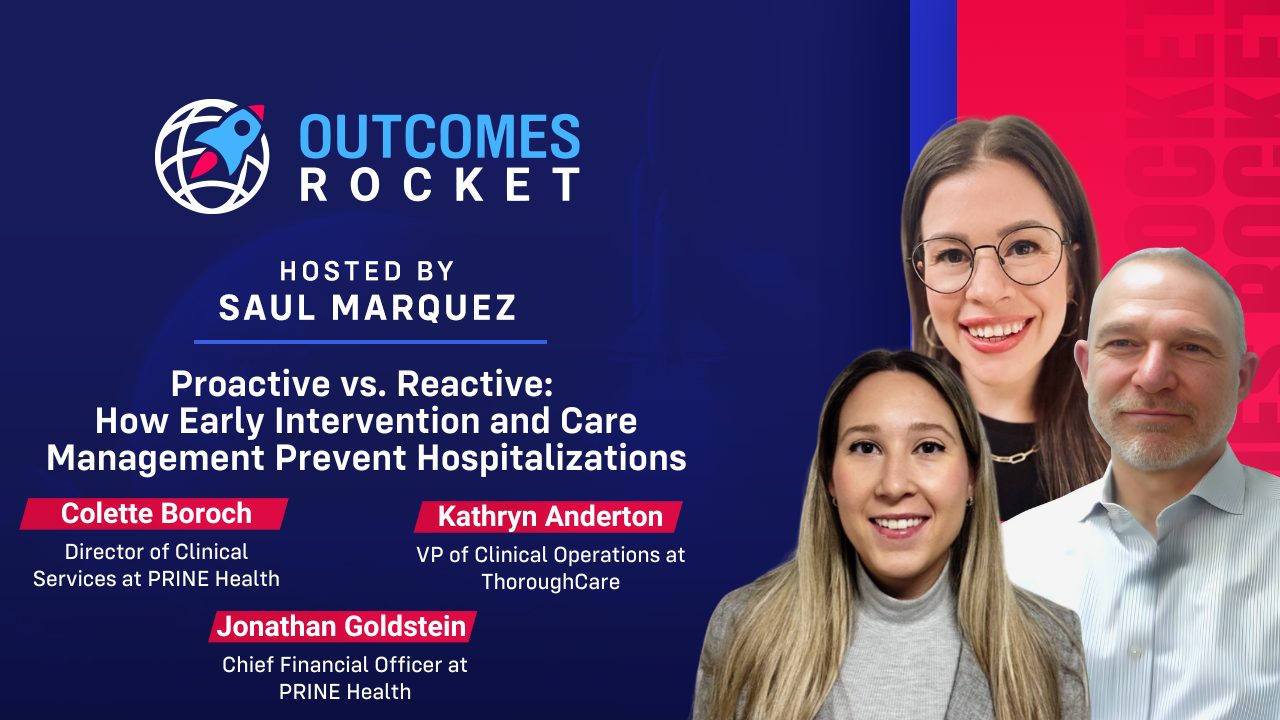
Healthcare today stands at a crossroads. To improve outcomes and reduce unnecessary hospitalizations, providers must shift from a reactive model—waiting for problems to become crises—to a proactive model that identifies and addresses care needs early. That’s the core message behind the recent Outcomes Rocket Podcast episode featuring PRINE Health leaders Colette Boroch and Jonathan Goldstein, alongside Kathryn Anderton of ThoroughCare.
Why the Shift Toward Proactive Care Matters
Traditional healthcare often waits until a patient’s condition escalates before intervening. This reactive approach can lead to avoidable emergency department visits, hospital admissions, and patient distress. In contrast, proactive care centers on early identification of clinical risk, ongoing patient engagement, education, and coordinated follow-up—long before health conditions worsen.
During the podcast, the panel highlighted how focusing on early screening, repeated education, and systematic care management can prevent patients from “crashing” into the hospital. This shift not only improves patient safety and experience but also aligns with value-based care goals that emphasize quality and cost-effective outcomes.
Lessons From the Front Lines: Insights from the Podcast
Early Identification & Patient Engagement (Colette Boroch)
Colette underscored the importance of early screening and education, especially for patients with chronic disease or high risk of hospitalization. By removing barriers—such as transportation challenges and health literacy gaps—care teams can stay ahead of deteriorations in health. Routine engagement helps patients adhere to care plans, understand warning signs, and access support before a crisis hits.
Seamless Care Management & Clinician Support (Kathryn Anderton)
Kathryn highlighted the role of clinical care management platforms in streamlining documentation, standardizing workflows, and freeing clinicians to focus on direct patient care. Technology that reduces administrative burden not only improves efficiency but also strengthens the ability to monitor patient data consistently. This structured approach allows care teams to track trends and intervene earlier.
Financial & Strategic Value (Jonathan Goldstein)
Jonathan tied it all together from a financial perspective, explaining how proactive care coordination can reduce avoidable utilization, improve quality metrics, and support shared savings models. In value-based care arrangements, keeping patients healthy isn’t just better for individuals—it’s more sustainable for healthcare systems and provider organizations.
Proactive vs. Reactive: What’s the Difference?
While reactive care addresses health problems after they occur—often at a higher cost or with worse outcomes—proactive care intervenes earlier, with regular touchpoints, preventive screenings, and education. Healthcare teams can then spot subtle issues and manage them before escalation. This results in better long-term outcomes and fewer avoidable hospitalizations.
Key elements of proactive care include:
- Regular outreach and follow-ups between visits
- Risk stratification to prioritize patients most likely to benefit
- Patient education & self-management support
- Technology-enabled monitoring and alerts
- Coordinated care teamwork across providers
Why It Matters for PRINE Health
At PRINE Health, we believe that investing in early intervention, continuous care management, and collaboration helps reduce hospitalization rates while improving patient outcomes. By embracing proactive models and supporting clinicians with the right tools and data, healthcare organizations can accelerate their transition to value-based care—enhancing patient experiences and delivering measurable results.